Tritan, PP, PE: Which Material Is Right for Your Shaker?
Tritan, PP, PE: Which Material Is Right for Your Shaker?
Choosing the right plastic is one of the most important decisions when developing a white-label shaker or drinking bottle. Tritan, polypropylene (PP), and polyethylene (PE) are among the most commonly used materials — yet each comes with its own specific advantages and disadvantages.
Why Material Selection Matters So Much
The material determines not only the look and feel of your product, but also its durability, safety, and printability. The four most important decision factors are shown in the table below.
| Factor | Impact | Example |
|---|---|---|
| Brand perception | Material determines perceived value | Tritan shaker conveys premium quality |
| Food safety | All materials must be compliant | BPA-free as a basic requirement |
| Print result | Surface quality influences print quality | Tritan ideal for UV printing |
| Cost structure | Material costs significantly affect unit price | PE cheapest, Tritan most expensive |
Good to know: Material selection also influences reorder rates. Premium materials like Tritan lead to higher customer satisfaction and therefore more repeat orders.
The Three Materials in Detail
Tritan (Copolyester)
Tritan is a copolyester developed by Eastman Chemical that has established itself as the premium standard.
Advantages:
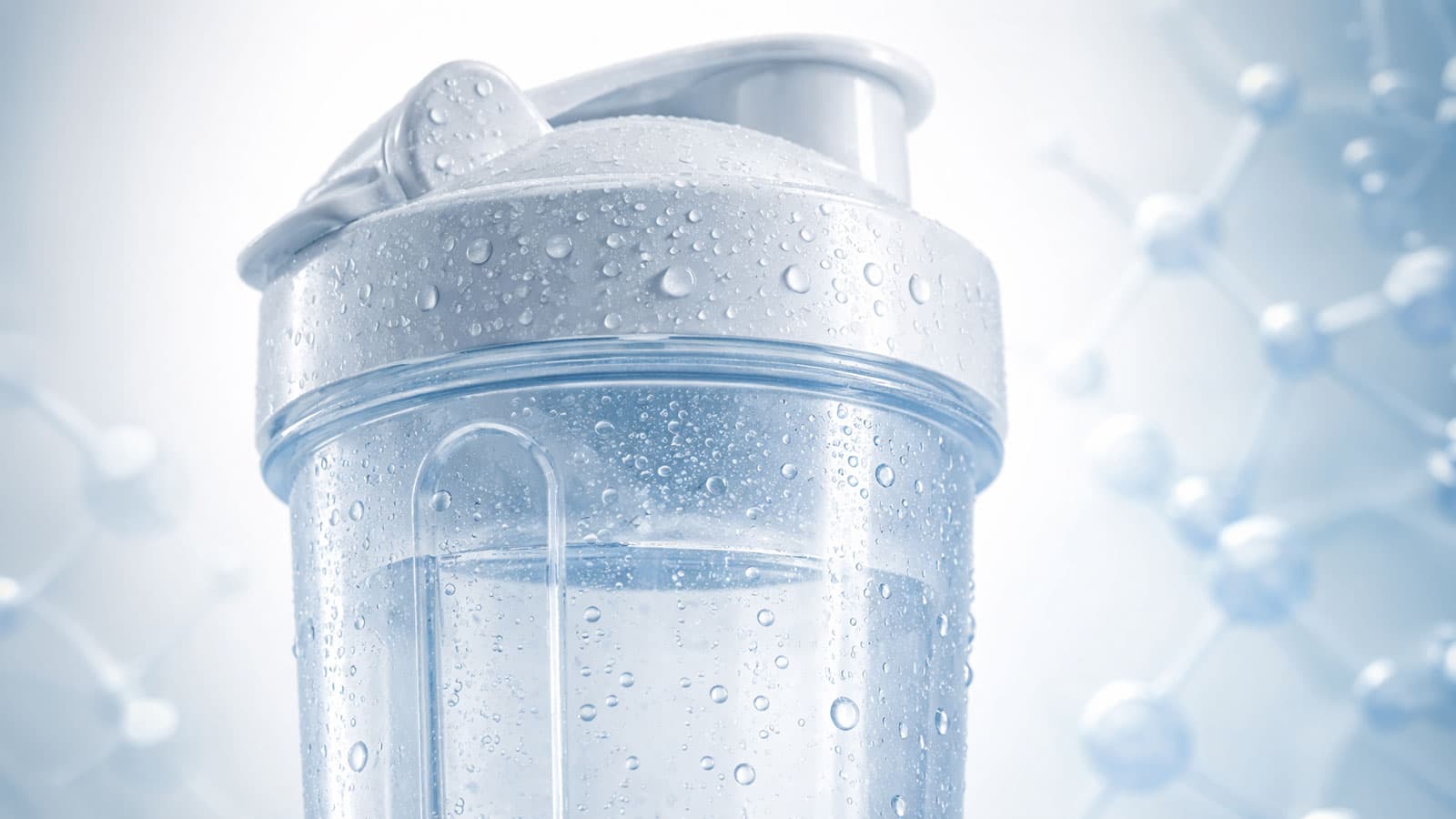
- Crystal-clear transparency, comparable to glass
- Extremely shatter-resistant and impact-proof
- BPA-free according to the manufacturer Eastman
- Dishwasher-safe up to 100 degrees Celsius
- Taste-neutral
- Excellent UV resistance
Disadvantages:
- Higher material cost share than PP or PE
- Heavier than polypropylene
- Limited colour options for transparent variants
Ideal for: Premium shakers, fitness drinking bottles, health products.
Polypropylene (PP)
PP offers an excellent price-to-performance ratio.
Advantages:
- Very lightweight (lowest density among common plastics)
- Good chemical resistance
- Food-safe and BPA-free
- Cost-effective to produce
- Good printability after pre-treatment
- Microwave-safe
Disadvantages:
- Not transparent (only translucent or opaque possible)
- Can become brittle at low temperatures
- Lower impact resistance than Tritan
Ideal for: High-volume shakers, sports bottles, promotional items with large quantities.
Polyethylene (PE)
PE comes in various densities (HDPE, LDPE) and is frequently used for flexible containers.
Advantages:
- Very low production cost
- Flexible and soft (especially LDPE)
- Good chemical resistance
- Food-safe
- Easily recyclable
Disadvantages:
- Low heat resistance
- Not suitable for hot beverages
- Limited transparency
- More difficult to print on
Ideal for: Closures, lids, squeeze bottles, mass production at the lowest possible cost.
Comparison Table: Tritan vs. PP vs. PE
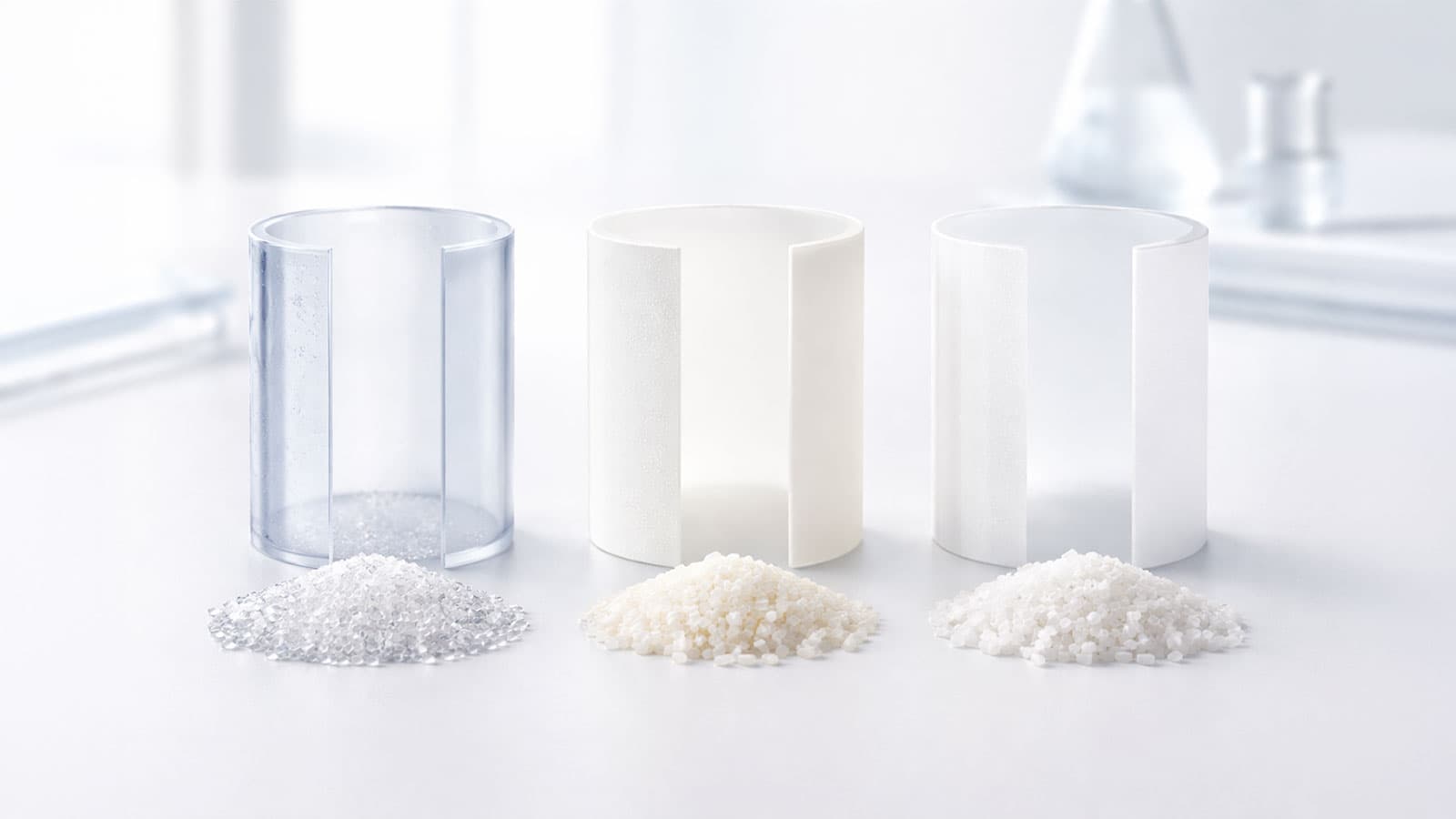
| Property | Tritan | PP | PE |
|---|---|---|---|
| Transparency | Very high | Low | Low to medium |
| Impact resistance | Very high | Medium | Medium |
| Weight | Medium | Light | Light |
| Heat resistance | High (100°C) | Medium (110°C) | Low (80°C) |
| BPA-free | Yes | Yes | Yes |
| Printability | Very good | Good | Satisfactory |
| Cost | High | Low | Very low |
| Perceived value | Premium | Standard | Basic |
Material Choice and Printing Methods
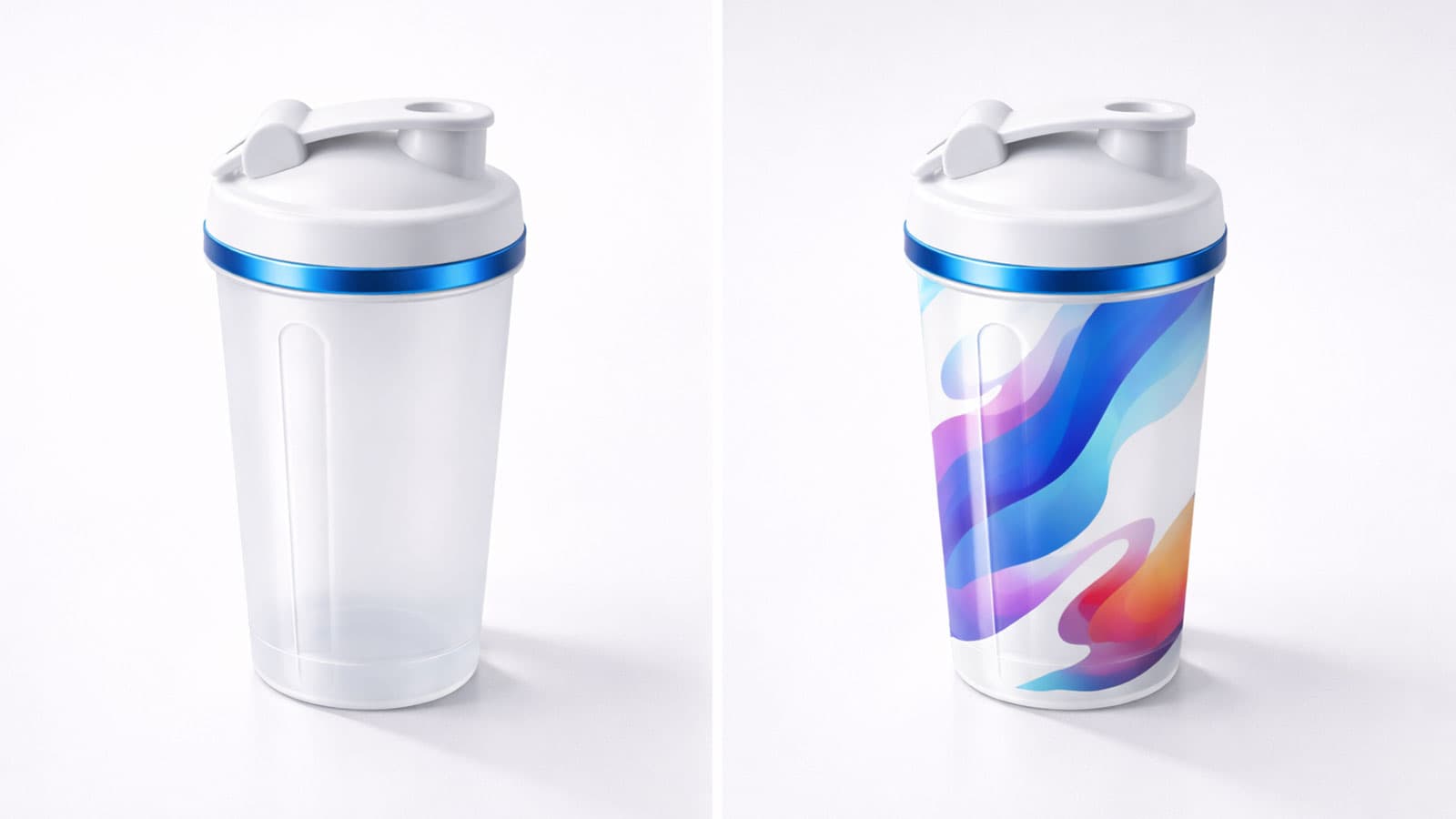
The choice of material directly influences which printing methods are best suited. Thanks to its smooth surface, Tritan offers the ideal conditions for UV direct printing and screen printing. PP requires pre-treatment but then delivers good results. PE is the most difficult material to print on.
Recommendations for B2B Projects
The right material choice depends on three factors.
| Decision Factor | Recommendation |
|---|---|
| Target audience and positioning | Premium brands benefit from Tritan; PP is ideal for functional everyday products |
| Quantity and budget | For high quantities, PP is the most cost-effective choice |
| Intended use | For the perfect shaker, a combination of materials is often the most sensible approach |
Practical tip: A proven combination is a Tritan body with a PP lid — you get the premium look of Tritan while benefiting from the cost-effective and robust closure solution that PP provides.
Explore our full range in our product overview.
Conclusion
Tritan, PP, and PE each have their place. Tritan excels as a premium material. PP offers the best price-to-performance ratio. PE is suited to accessories and cost-optimised projects.
Want to know which material is the best fit for your project? Our team is happy to provide personalised advice. Get in touch now — we'll find the best solution together.